
The third time that week I had to unbutton my jeans just to breathe comfortably after lunch. That was my “aha” moment. It wasn’t a “lightbulb” moment—it was more like a “heavy, bloated, slightly panicked” moment. I was sitting at my desk in Austin, staring at a half-eaten sourdough sandwich, feeling like my stomach was filled with warm concrete.
For months, I thought the answer was simple: kill the carbs. My best friend, who’s a doctor (and yes, she’s the one who tells me when my “health” trends are actually just expensive pee), told me that my gut was screaming for help. But the internet? The internet told me to go keto. To go zero-carb. To live on nothing but bacon and avocado.
So, for exactly 12 days, I tried it. I lived on eggs and greasy meat. And you know what happened? My digestion got *worse*. I felt sluggish, my skin looked gray, and the bloating? It actually intensified. That’s when I realized: the problem wasn’t the carbs. The problem was how my body was processing everything. This is the story of how I fixed my digestion without cutting out carbs, and honestly, it was way easier than the keto life.
If you’re feeling that [bloated stomach sensation](/category/bloating-relief/) every time you eat, you’re probably not a “carb person.” You’re likely just someone with a broken digestive rhythm. Let’s dig into what’s actually happening in there.
The Science of the “Gut Sludge”
Your digestive system isn’t just a tube that moves food from point A to point B. It’s more like a high-speed, chemical-heavy processing plant. And like any plant, if the timing is off or the workers are on strike, the whole thing turns into a mess.
Think of your stomach acid (HCL) and your digestive enzymes like the “cleaning crew” of a nightclub. When you eat a meal—especially one containing starches or carbs—the crew rushes in to break everything down so it can be absorbed. But if you’re stressed, or if you’re drinking 500ml of ice-cold water right in the middle of your meal, you’re essentially spraying the cleaning crew with a fire hose. They can’t do their job. The food doesn’t break down. It sits. It ferments. It turns into what I call “gut sludge.”
This is where the fermentation happens. When undigested food sits in your large intestine, your gut bacteria go to town on it. They love those carbs. They eat them, and their “waste product” is gas. A lot of gas. This is why you feel like a balloon about 45 minutes after eating a bowl of pasta.
According to the [Mayo Clinic](https://www.mayoclinic.org), digestive issues like this are often linked to how we *interact* with our food, not just the food itself. It’s about the mechanics. The data shows that a huge percentage of “food intolerances” are actually just “digestive capacity” issues. You aren’t intolerant to the bread; you’re just unable to break it down efficiently.
So, instead of cutting out the sourdough, I had to learn how to support the “cleaning crew.” Here is exactly how that happened.
Step 1: The “Liquid Logic” (Stop Drowning Your Enzymes)
This was the hardest one for me. I am a coffee addict. I drink a massive latte at 8 AM, and then I tend to chug water throughout the day. But here’s the thing—I was doing it at the wrong times.
When you drink large amounts of liquid (especially cold water) during a meal, you’re essentially diluting your stomach acid. You need that acid to be highly concentrated to break down food. By diluting it, you’re making the job twice as hard for your body. This is a huge part of how I fixed my digestion without cutting out carbs—by simply changing when I hydrated.
Now, my rule is simple:
- 30 minutes before a meal: Drink about 250ml of room-temperature water. This “primes” the stomach.
- During a meal: Only small sips. Maybe a tiny bit of warm tea. No ice-cold water. No giant gulps.
- 60 minutes after a meal: This is when you can go back to your hydration routine.
It sounds obsessive, right? (It felt that way for the first three days.) But the difference in how “light” my stomach felt after a meal of rice and beans was night and day. No more heavy, dragging sensation. Just… normal. If you’re struggling with [gut motility](/category/gut-health-tips/), this is the absolute easiest place to start.
Step 2: The “Mechanical Fix” (Chewing is Not Optional)
I used to be a “shoveler.” I’d sit at my laptop, scrolling through emails, and just shove food into my mouth. I’d swallow large, unchewed chunks of bread and meat, thinking my stomach would “just handle it.”
Spolier alert: It doesn’t.
Your stomach doesn’t have teeth. Period. Every single bit of food needs to be a liquid-like paste before it hits your stomach. This is called “mechanical digestion.” When you skip this, you’re sending massive, jagged boulders of food into a vat of acid. It’s a recipe for disaster.
I started using a timer. Every time I sat down to eat, I’d aim for at least 20-30 chews per bite. It felt weird. It felt slow. I actually felt a bit self-conscious the first time my partner saw me chewing a piece of sourdough for a full minute. But then, something magical happened.
I started feeling *full* much faster. Because the brain takes about 20 minutes to receive the “we are full” signal from the gut, eating slower prevents that “overstuffed” feeling. And because the food was already broken down, the bloating disappeared. This is a non-negotiable part of how I fixed my digestion without cutting out carbs. It’s not a diet; it’s a technique.
Step 3: The “Carb Pairing” Strategy (Never Eat Naked Carbs)
This is the one thing my mom (who loves her Facebook health articles) would probably argue with, but it’s backed by real science. Most people eat “naked carbs.” A plain bagel. A bowl of plain white rice. A piece of toast with nothing on it.
When you eat a naked carb, your blood sugar spikes. Then it crashes. This crash triggers cortisol, which—as we discussed—is the enemy of digestion. High cortisol shuts down the “rest and digest” system (the parasympathetic nervous system) and kicks you into “fight or flight.” And you can’t digest a sandwich if your body thinks it’s being chased by a tiger.
To fix this, I started “clothing” my carbs. Every carb must be accompanied by a “buffer” of fiber, fat, or protein.
- Instead of just toast: I have toast with avocado and a poached egg.
- Instead of a plain bowl of pasta: I add a massive amount of sautéed zucchini and some chicken.
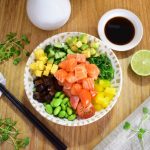
- Instead of a plain rice bowl: I add fermented pickles (for those glorious probiotics!) and a fatty salmon.
By adding these buffers, the glucose enters your bloodstream much more slowly. You don’t get the spike, you don’t get the cortisol crash, and your gut isn’t hit with a sudden “sugar bomb” that triggers fermentation. This is the core of [balanced eating](/category/meal-prepping-for-health/)—it’s about the combination, not the restriction.
Oddly enough, the more carbs I “clothed” with protein and fat, the more the cravings actually died down. It’s like my body finally felt stable.
The “Rest and Digest” Reality Check
There’s one more thing. And this is the part most people ignore because it’s “not a food.”
Stress.
You can eat the most perfect, well-chewed, carb-clothed meal in the world, but if you are eating it while staring at a stressful email from your boss, your body is in “Sympathetic” mode. Digestion happens in the “Parasympathetic” mode. They are two different branches of your nervous system. They cannot both be at 100% at the same time.
I realized my “digestion problem” was actually a “lifestyle problem.” I was eating on the go, eating while working, and eating while anxious. Now, I take 5 minutes. Just 5. I sit down. I breathe. I put the phone in another room. I treat the meal like a ritual. It sounds a bit “woo-woo,” but the physiological reality is that deep breathing tells your vagus nerve to “turn on” the digestive juices.
Or at least, that’s what I thought until I realized that even with all this, a bad night’s sleep can still wreck my stomach the next day. Everything is connected. Your gut is the second brain for a reason.
TL;DR: My New Digestive Blueprint
If you want to try this, don’t do everything at once. You’ll quit by Tuesday. Pick one. Just one. Here is the summary of how I fixed my digestion without cutting out carbs:
- Hydrate smart: Water 30 mins before or 60 mins after, not during.
- Chew like a pro: Turn food into liquid before swallowing.
- Dress your carbs: Never eat a naked carb. Always add protein, fat, or fiber.
- Breathe: Eat in a calm state to trigger the “rest and digest” response.
The result? I can eat a bowl of pasta with my friends on a Friday night and wake up the next morning feeling light, energetic, and—most importantly—not like a human balloon.
So, what’s your biggest digestive struggle? Is it the bloating, the energy crashes, or just the sheer mystery of it all? Drop a comment below—I’d love to chat and see if we can troubleshoot it together!
Disclaimer: I’m a wellness expert, not a doctor. I’ve spent 8 years researching this, but your body is unique. Always chat with your physician before making massive changes to your diet or lifestyle.