
You know that heavy, sludge-like feeling in your legs when you drag yourself onto a treadmill? Or the way your soul leaves your body the moment you hear “burpees” over the gym speakers?
I’ve been there. Specifically, I was there at 6:30 AM on a Tuesday, wearing leggings that were slightly too tight, staring at a wall in my living room, debating whether walking to the fridge counted as cardio.
Here’s the thing: most of us hate exercise because we’ve been sold a lie. We’re told that if it doesn’t hurt, if we aren’t sweating through our shirts in 20 minutes, it didn’t count. And so, we treat workouts like a punishment. Like a fine for eating that extra slice of pizza.
But I’ve been researching nutrition and wellness for eight years now. I’ve tracked my steps, my heart rate, my sleep, and my caffeine intake with more obsession than my mother tracks my Facebook posts. And I’ve learned that how to actually enjoy exercise when you hate working out isn’t about willpower.
It’s about biology. And a little bit of rebellion.
## The Cortisol Trap: Why Your Body Resists Movement
Think of your body’s response to intense exercise like a fire alarm. When you sprint, lift heavy weights, or do high-intensity interval training (HIIT) when you’re already stressed, your cortisol spikes. Cortisol is great in short bursts — it’s the chemical that helps you run from a bear. But if you’re just trying to move your body because your doctor said so, and your cortisol is already sky-high from work emails and traffic, your body goes into defense mode.
It says, *”We are burning too much energy. We need to save it. Let’s make you tired.”*
And that’s why you feel exhausted after a workout instead of energized. You’re not weak. You’re just fighting your own chemistry.
A study published in the *Journal of Applied Physiology* found that moderate-intensity movement increases blood flow to the brain and reduces inflammatory markers, whereas extreme intensity can temporarily suppress immune function if you’re already burned out. The difference? About 20 minutes of your sanity.
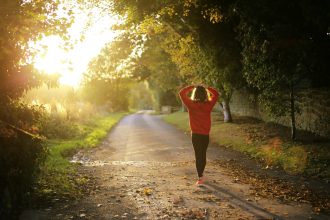
I used to do 45-minute spin classes. Brutal. I’d leave feeling like I’d been dragged behind a truck. Then, for exactly one month, I switched to 20-minute walks. Just walking. At a pace where I could still hold a conversation, but maybe with a slight breathiness.
The result? I had more energy at 3 PM. I slept better. And oddly enough, I started looking forward to moving.
## Step 1: Lower the Bar (Drastically)
If you hate working out, the first rule is to stop trying to be an athlete.
Most people fail because they set the bar at “Olympic hopeful.” They think they need a gym membership, specific shoes, and an hour of uninterrupted time. So when life happens — and it always does — they quit.
Instead, aim for “non-zero.”
I call this the “Two-Minute Rule.” If you don’t want to exercise, commit to doing it for just two minutes. Put on your sneakers. Step outside. Walk in place. That’s it.
Why does this work? It’s called “behavioral activation.” The hardest part of any task is starting. The friction is highest at minute zero. Once you’re already moving, the momentum carries you. Often, you’ll keep going for ten, maybe fifteen minutes. But even if you stop at two, you’ve kept the habit alive. You didn’t break the chain.
Here’s what I tell my clients (and my mom, gently, when she sends me articles about “10-minute abs for busy moms”): consistency beats intensity. Every single time.
A 2023 meta-analysis in *The Lancet Psychiatry* reviewed data from over one million people. They found that the mental health benefits of exercise were highest for those who exercised for 30-45 minutes, three to five times a week. But here’s the kicker: people who exercised for less than 30 minutes still saw significantly better mental health outcomes than those who didn’t exercise at all.
So if you only have 10 minutes? Take it. Don’t skip it because it’s “not enough.” It is enough.
## Step 2: Pair It With “Temptation Bundling”
This is my favorite hack. I stole it from behavioral economist Katy Milkman, and it has changed my life.
Temptation bundling is simple: only allow yourself to do something you *love* while you are exercising.
For me? I only listen to my true-crime podcast when I am jogging. Not while cleaning. Not while doing dishes. Only while moving. So, do I always want to jog? No. But I really want to hear what happened to the missing baker in Oregon. So I lace up my shoes.
For you, it could be anything.
* Only watch your favorite reality TV show while on the stationary bike.
* Only listen to that audiobook you’ve been dying to start while walking the dog.
* Only drink your expensive matcha latte while stretching.
You’re essentially hacking your brain’s reward system. You’re associating movement with pleasure, not pain. And suddenly, that walk isn’t a chore; it’s your “me time” with the podcast.
It sounds silly, but it works. I tried it for three days with a new cooking show. By day four, I was craving the walk just to see if the soufflé collapsed.
## Step 3: Change *How* You Move
If you hate the gym, stop going to the gym.
Seriously. Who says exercise has to happen in a room with mirrors and other people judging your form? I’ve seen people cry on elliptical machines. I’ve seen grown adults groan during yoga.
Find movement that doesn’t feel like work.
* **Dance:** Put on your favorite playlist (no, not smooth jazz. Upbeat pop.) and dance in your kitchen while making dinner.
* **Garden:** Digging, planting, weeding — it’s functional strength training. Plus, you get dirt under your nails and fresh air.
* **Swim:** It’s zero impact. If your knees hurt, this is your friend.
* **Hike:** Austin is full of trails. Even a flat, easy trail counts.
I used to hate running. The pounding, the heat, the sweat. Then I started hiking. Suddenly, I was logging 5 miles a week without thinking about it. Why? Because I was looking at the view, not the clock.
When you enjoy the activity, you don’t notice the effort. You’re just doing it.
## The Science of “Endorphins vs. Endocannabinoids”
Here’s a fun fact that might change your perspective: the “runner’s high” isn’t actually caused by endorphins.
It’s caused by endocannabinoids.
Endorphins are large molecules. They can’t cross the blood-brain barrier easily. Endocannabinoids? They’re small. They slip right in. And they’re the same chemicals found in cannabis.
This means you don’t need to sprint at 10 mph to get high. You just need moderate movement. A brisk walk, a leisurely bike ride, a gentle yoga session — if you keep it at a moderate pace for at least 10-15 minutes, your brain releases these natural mood boosters.
So you don’t need to suffer. You just need to move steadily.
And here’s the best part: these chemicals reduce anxiety. They help you feel calm. So if you’re exercising to “burn off stress,” you don’t need to punch a bag. You need to walk.
## Stop Guilt-Tracking Your Rest Days
We live in a culture that glorifies “no days off.” I’ve seen people post workouts while sick. While on vacation. While clearly exhausted.
But rest is part of the process.
Your muscles don’t grow when you work out. They grow when you rest. Your brain doesn’t consolidate learning when you’re grinding. It consolidates when you’re sleeping or chilling.
If you hate working out, you’re probably also bad at resting. You sit on the couch and worry that you *should* be doing something productive.
Try this: Treat rest as active recovery. Go for a slow stroll. Do some gentle stretching. Just keep the blood flowing without spiking your heart rate.
I used to feel guilty if I didn’t sweat. Then I realized that my cortisol levels were through the roof. I was stressed *about* exercising. Once I allowed myself to just “move lightly,” my overall energy improved.
## The Bottom Line: It’s Not About the Exercise, It’s About the Feeling
How to actually enjoy exercise when you hate working out comes down to one question:
**How do you want to feel after?**
If you aim for “exhausted,” you’ll hate it.
If you aim for “calm,” “clear-headed,” or “slightly less stiff,” you might just enjoy it.
Start small. Lower the bar. Bundle temptation. Move in ways that feel good. And stop punishing yourself.
Your body isn’t a machine to be optimized. It’s a living, breathing thing that just wants to move. Listen to it.
—
### FAQ: Quick Answers for the Skeptical
**Q: Is 10 minutes of exercise enough?**
A: Yes. For mental health and basic movement, absolutely. The CDC notes that any amount of physical activity is better than none. Ten minutes gets the blood flowing and wakes up your brain.
**Q: Do I need special equipment?**
A: Nope. Your body weight is enough. Shoes help for walking, but that’s it. If you have a yoga mat at home, use it. If not, the carpet works fine.
**Q: What if I still hate it after two weeks?**
A: Then change the activity. If you hate walking, try dancing. If you hate dancing, try lifting light weights. If you hate weights, try swimming. It’s not about forcing yourself to like *this* specific thing. It’s about finding *something*.
**Q: Can I exercise if I’m really tired?**
A: Often, yes. A 10-minute walk can be more energizing than a nap for some people. It’s called the “paradoxical energy boost.” But listen to your body. If you’re sick or injured, rest.
—
I’m not a doctor. I’m just a girl in Austin who drinks too much coffee and spent years trying to figure out why I felt so tired all the time. But what I’ve learned is that movement doesn’t have to be a battle.
Have you ever found an exercise you actually liked? Or is there one thing that makes you hate movement the most? Let me know in the comments. I read every single one. And if you need more tips on balancing wellness without the stress, check out our guide on [how to build a sustainable morning routine](/category/morning-routine/).
Stay curious, stay moving,
Xiao Ai